

Prisma Compute vs Vercel Pricing

You're weighing Prisma Compute against Vercel to host a TypeScript app, and you want the hard numbers quick. Here they are, with some musings about them after.
Prisma Compute pricing is live: the rates cited here are the production prices. Every plan also includes a monthly request allowance — from 1M requests on the Free plan to 100M on Business — which this raw meter-by-meter comparison leaves out. Vercel's pricing is live too.
Comparing Prisma Compute and Vercel by usage meter
Both are usage-based and scale to zero, so once an app goes idle, it costs nothing.
| Meter | Prisma Compute | Vercel (Pro) | Cheaper |
|---|---|---|---|
| Requests / invocations | $1.00 / 1M | $0.60 / 1M | Vercel (~40% less) |
| Provisioned memory | $0.006 / GB-hour | $0.0106 / GB-hour | Prisma (~43% less) |
| Active CPU | $0.064 / vCPU-hour | $0.128 / vCPU-hour | Prisma (half) |
| Outbound bandwidth | $0.025 / GB | $0.15 / GB | Prisma (6× less) |
| Edge requests (workflow) | None | $2.00 / 1M | Prisma |
| Seat fee (workflow) | None | $20 / user / mo (incl. $20 credit) | Prisma |
Note: Vercel has a more mature platform including a global edge network and a big ecosystem, and it is a brand new product on Prisma's side. On included usage, Prisma's Free plan comes with 1M Compute requests a month, and paid plans include 5M–100M requests before the request meter starts.
Comparing a 20M-request app on Prisma Compute vs Vercel
Here's a single growing app for a month. Let's assume 20M requests, 2 GB of memory held while running (call it always-on for a 730-hour month, so 1,460 GB-hours), 300 vCPU-hours of actual compute, and 2 TB of outbound traffic. One seat.
| Line | Prisma Compute | Vercel (Pro, 1 seat) |
|---|---|---|
| Requests / invocations (20M) | $20.00 | $12.00 |
| Memory (1,460 GB-hrs) | $8.76 | $15.48 |
| Active CPU (300 hrs) | $19.20 | $38.40 |
| Egress (2 TB, 1 TB included on Vercel) | $50.00 | $150.00 |
| Seat (workflow) | $0.00 | $20.00 |
| Total | ~$98 | ~$236 |
This is one snapshot. It assumes a single seat and leaves edge requests out entirely. Two things move the total from here. The seat fee tracks headcount, not load. Every engineer you add raises the Vercel bill while Prisma stays flat. And the gap cuts both ways: at near-zero egress on a single seat the two converge, and the split widens as egress and seats climb.
The bill splits into app work and shipping workflow
Why does it shake out this way? Because both price the same way, then Vercel keeps going. Every hosting bill splits into two kinds of cost:
- Work: what the app does while it's running: requests served, memory held, CPU burned, data sent out. Both companies charge for it, and neither charges while the app sits idle. It's the same model: Vercel calls it Active CPU billing ("pay for execution, not idle"); Prisma calls it "pricing the work, not the workflow".
- Workflow: the activity around shipping the app: developer seats, deploys, preview environments, routing. It scales with how your team (or your agent) operates, not with what your users do. Prisma meters none of it; Vercel meters two pieces.
Side by side:
| Meter | Type | Prisma Compute | Vercel |
|---|---|---|---|
| Requests, CPU, memory, egress | Work | Charged | Charged |
| Idle time | Work | Free | Free |
| Developer seats | Workflow | Free | Charged |
| Edge requests | Workflow | Free | Charged |
The work is a wash. The whole gap is the workflow.
Why the same workload produces different bills
Beyond the pricing philosophy, two concrete things drive the numbers.
Architecture: Prisma Compute runs next to your database on Prisma Postgres instead of calling across to Supabase, Neon, or other vendors. This means the app-to-database traffic that inflates egress bills doesn't leave the building.
Agents: Deploys, previews, and idle apps cost nothing on Prisma; every deploy is just an immutable version with its own preview URL. That's very little for a developer who ships a few times a day, but an agent's change → test → preview → retry loop will spin up a lot more, all of which is workflow, all of which Vercel will bill you for, all of which is free on Prisma Compute.
To be fair, this is a narrow comparison. Vercel is a frontend-first platform, arguably the best there is, and all we've measured is the cost of running compute next to your data. Vercel offers more than that, which should be considered.
What developers are saying about Vercel's pricing
When Vercel's Fluid compute fits the workload, it can save you a lot of money. Steven Tey, founder of dub.co, saw their bill drop 50% after turning it on… "thought my Vercel Usage tab was broken". Some say Fluid can even come in cheaper than running Lambda yourself.
Beyond the free tier, it doesn't always go that way. The bill can jump with no jump in traffic. In one r/nextjs thread, a CTO described a frontend-only Next.js app going from "under $100 to over $800" in a single month, then moving to Cloudflare Workers for "under $20 for the same traffic."
In the same thread, another developer drew a sharp line between the two sides of Vercel: the frontend is "really nice and cheap/free," the backend "absolute highway robbery." Others pointed at workflow charges, like a $150 bill "for Deployment Protection Exceptions." The recurring frustration is not just that bills get high, it's that teams feel they discover the shape of the bill after the workflow has already run.
On the other hand, Prisma Compute has only just left beta, so developers haven't been able to use it long enough for meaningful pricing feedback yet. I am sure there will be, and I will update this article when this feedback starts to arrive.
Summary
At today's rates, Prisma Compute is a lot cheaper than Vercel for the parts of a bill that usually dominate (CPU, memory, egress) and it doesn't bill the seat, deploys, or previews. Vercel is cheaper on raw request price and has a more mature platform and an ecosystem Prisma needs to catch up with.
Finally, don't trust a blog article over your own math (or common sense). Figure things out for yourself before making a big commitment.
Run the math on your own app
Prisma Compute includes 1M requests a month on the Free plan. Deploy a TypeScript app next to your Prisma Postgres database and watch the usage meters as it runs.
About the author
Martin is a member of the Prisma team who has spent his career at the intersection of people, growth, and technology. He writes about the trends and news in the developer tools industry.
Keep reading
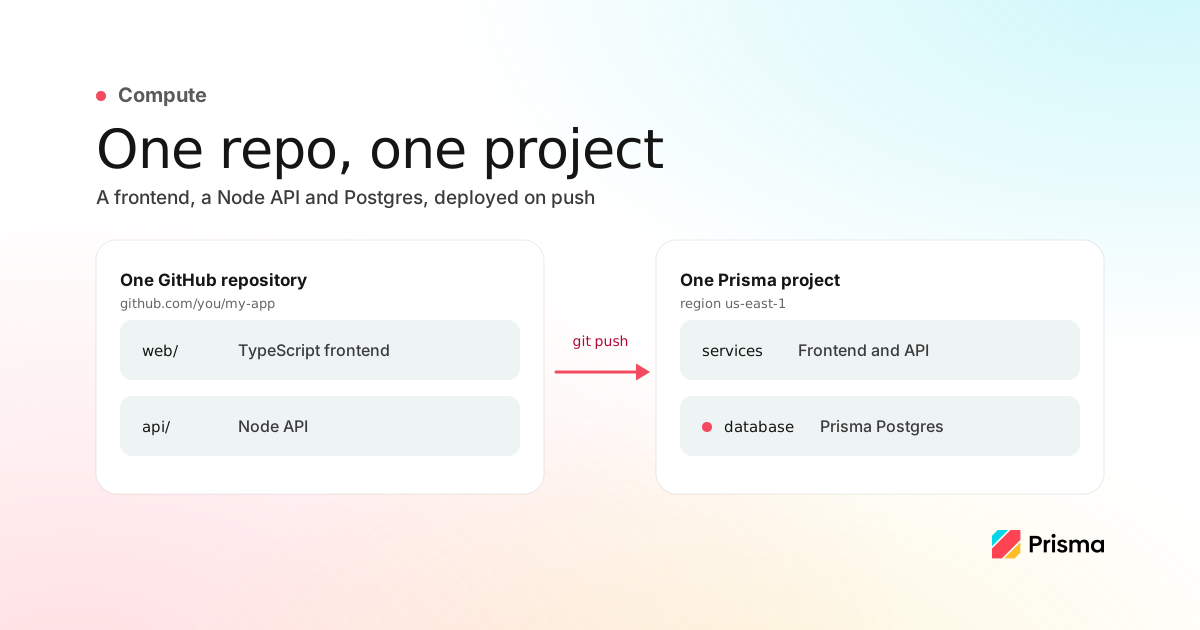
Where to host a TypeScript frontend, a Node API, and Postgres
Railway, Render, Fly.io and Prisma compared for a TypeScript frontend, a Node API and Postgres from one GitHub repo: databases, deploys, previews and limits.

Serverless Postgres: How It Works and How to Choose a Provider
Serverless Postgres separates compute from storage and bills for usage instead of provisioned servers. How scale-to-zero, cold starts, and the three pricing models compare across Neon, Prisma Postgres, Supabase, Aurora, and PlanetScale.
Build your next app with Prisma
Start free. Scale when you’re ready.